Twelve Inches of Air: Living Comfortably With Radiators and Furniture
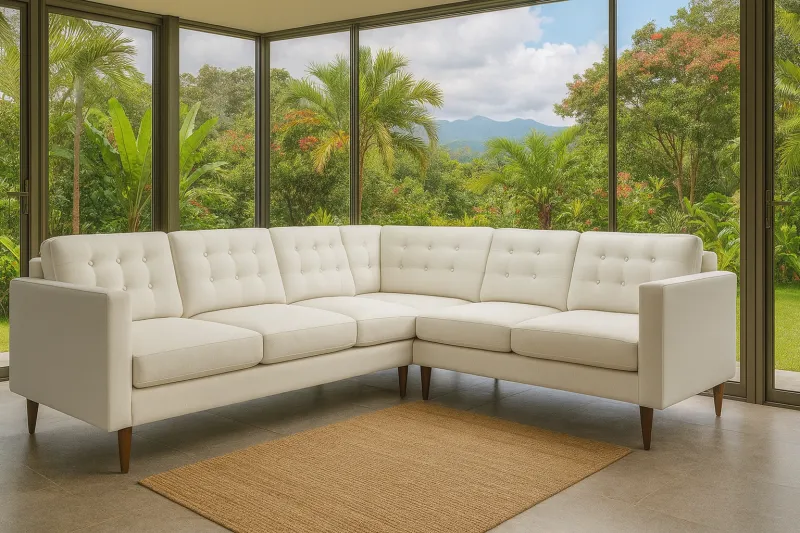
Photo: sofa near radiator in winter living room warm UK home, via www.dreamsofa.com
There is a particular kind of British evening that goes like this: the heating clicks on at half four, the radiator under the window gets properly hot, and the back of the sofa absorbs all of it while the rest of the room stays at a polite fifteen degrees. Half the house is being warmed. Unfortunately it is warming a cushion.
This is not really a furniture problem, or not only one. It is a layout problem, and it comes back every November. So here is a working approach to fitting a room around its heat sources, written for people in terraces, semis, flats and the occasional converted chapel, whether they own the place or rent it.
Why the radiator gets a vote
A standard panel radiator does its job by convection. Cool air drifts in along the floor, warms against the metal, rises out of the top, and circulates. Block the bottom and top and you get a very expensive warm slab that heats the object in front of it instead of the air behind it.
That is the whole theory. Everything below is just applying it without making the room look like a showroom for plumbing.
Give it a hand's width
A gap of around 100mm to 150mm between the radiator face and the back of any upholstered piece will keep most of the convection going. You do not need a corridor. You need air.
If the sofa is currently flat against the radiator, pull it forward and check whether it still works in the room. Often it does, and the difference in warmth is noticeable within an hour. If pulling it forward leaves a daft little strip of unused floor, resist the urge to fill it with a cushion basket.
Sofas: the honest options
If a radiator sits on the only wall long enough for a sofa, you have three routes. The first is to accept a gap and a slightly floatier layout, which usually looks better than expected and makes the room feel bigger. The second is to swap a deep two-and-a-half seater for a narrower bench or a low-back sofa that does not trap the rising heat. The third is to leave the wall clear and put two smaller seats at right angles instead, which is often the only configuration that works in a narrow terrace living room anyway.
What does not work: a fabric sofa pressed to the radiator with a throw over the back. That is a fire risk as well as a heating own-goal, and the throw will hold the heat against the fabric for hours.
Desks and the cold-knee problem
Working from home in winter, the temptation is to face the radiator. Resist it. Direct radiant heat on your shins and face for six hours is not comfortable, it dries your eyes out, and it makes a warm room feel stuffy long before it actually is.
Better: run the desk along a side wall, or perpendicular to the radiator wall so you get indirect warmth. Put a rug under the chair to stop cold feet. If the room genuinely stays cold at desk height, a small under-desk panel heater on a timer does more for comfort than turning the thermostat up by two degrees and heating the hall as well.
Shelves over radiators: not really
Wall-hung shelves directly above a radiator look tidy in photos and behave badly in real life. They interrupt the rising air, they collect dust in the warm plume, and paper and board do not enjoy being slow-roasted from underneath all winter.
If you want something on that wall, keep it high — a framed print or a mirror well above the top of the radiator — or go for a shallow picture ledge rather than a full shelf. And if any piece of furniture has been sitting against a warm wall for years, check the back panel for warping before you move it somewhere more visible.
Curtains, and the radiator-under-the-window business
Radiators sit under windows for a reason: the rising warm air creates a curtain against the cold glass. Floor-length curtains that hang over the radiator undo that, trapping heat between fabric and wall and leaving the window cold.
The fix is boring and effective. Either shorten the curtains to just below the sill, or gather them into a tieback outside the radiator's width during the heating months. Roman blinds and shutters sidestep the issue entirely. If you love long curtains, be honest that you are choosing looks over a bit of warmth, and compensate elsewhere.
Radiator covers
These are popular and they are a compromise, not a solution. A well-made cover with a slatted top and open front reduces output by roughly a tenth to a fifth depending on the design. In a hallway you barely heat, that is a fair trade for tidying up the look. In the living room you sit in every evening, it is usually the wrong call.
If you do buy one, look for a design that leaves a clear opening along the bottom and front, and dust the inside once a month — warm dust smells like warm dust.
Where a compromise is genuinely fine
Not every wall needs to be optimised. A radiator boxed in by a bench in a spare room nobody uses before bedtime? Fine. A hallway console that half-covers a small radiator in a space that stays cool anyway? Also fine. The rooms where it matters are the ones you occupy for hours: the living room, the home office, the kitchen table where everyone sits.
Spend your effort there and leave the rest alone.
If you rent
You can still do most of this. Move the furniture, tie back the curtains, ask about the thermostatic valves so you can turn off the radiator in a room you do not use. Do not box anything in without checking, and never block access to the boiler or the meter.
Moving a radiator is a plumber's job and usually a modest one — but it needs permission. If the answer is no, a slim electric panel heater or a freestanding oil-filled radiator placed where you actually sit will do more for your winter than arguing about pipework.
Heat first, furniture second. Give the radiator its air, move the two pieces that matter, and the room will feel warmer at the same thermostat setting — which is, quietly, the best bit.