Three Lamps Before Five O'Clock: A Winter Lighting Plan for UK Living Rooms
By the second week of November, the UK has settled into its familiar winter rhythm. The clocks have gone back, the school run happens in the dark, and by half past four the living room window has turned into a black mirror. This is the season when lighting stops being a background detail and starts doing proper work. One ceiling light, however sensible, tends to flatten a room. It lights the middle and leaves the corners gloomy. It makes a sofa look like a waiting-room bench. It is not cosy, and it is not flattering to anyone holding a glass of wine.
The fix is not to flood the room with more light. It is to layer smaller pools of it, placed where you actually sit, read, put down a cup of tea and talk to people. At 925, we think of it as furniture-led lighting: the lamp follows the table, the table follows the way you use the room. Here is how to make that work in a real UK living room, especially a small or north-facing one.
Start with three points, not one
A good winter living room usually has at least three light sources at different heights. An overhead light is optional, and often best dimmed or switched off. Instead, aim for a triangle: a table lamp beside the sofa, a floor lamp or console lamp in a corner, and a smaller accent lamp on a shelf or sideboard. The triangle does not need to be symmetrical. It just needs to stop the room from having one harsh centre and several dark edges.
If your room is small, three lamps can sound like a lot. It is not. Use small-scale lamps: a slim table lamp on a side table, a narrow floor lamp behind an armchair, a rechargeable lamp on a bookshelf. The goal is not brightness everywhere. It is a gentle wash of light with a few brighter pools where you need them.
Put light where hands and eyes land
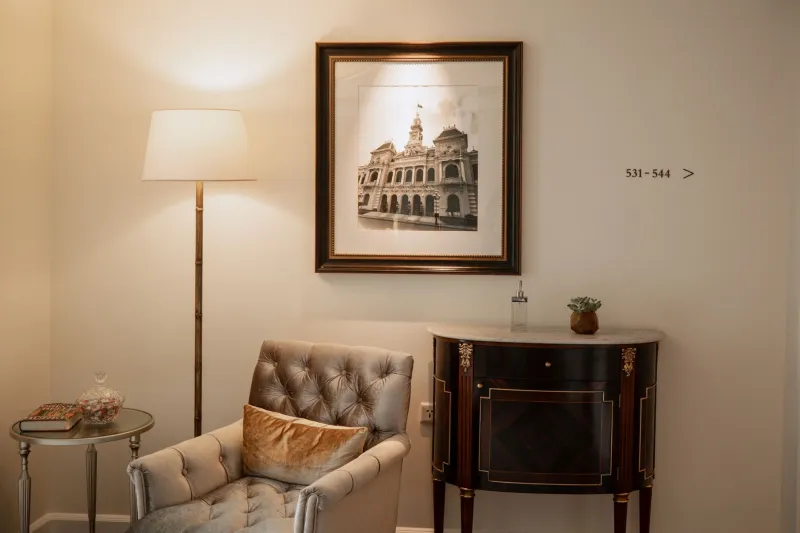
Think about the things you do after dark. You put a mug down. You read a book or a phone. You reach for the remote. You talk to a friend. Each of those moments has a natural place for light. A table lamp beside a sofa should sit roughly at shoulder height when you are seated, so it lights the page without shining in your eyes. A lamp on a console behind the sofa can wash the wall and make the room feel deeper. A small lamp on a shelf can pick out books or a plant and stop the corner from disappearing.
This is why the side table matters. A lamp without a table is a trip hazard. A table without a lamp is a missed opportunity. If you are short of floor space, look for a narrow console that fits behind the sofa, or a slim side table that slots between the sofa and the wall. Measure the gap first. A lamp base of 15 cm and a shade of 25 cm need a table that can take them without wobbling.
Choose warm bulbs, and check the label
The bulb is half the job. For a cosy winter room, look for warm white LEDs in the 2200K to 2700K range. Lower numbers are warmer and more amber. Cool white bulbs, often 4000K and above, are brilliant in a kitchen or a study but can make a living room feel like a dental surgery. Check lumens rather than watts for brightness. A 400 to 600 lumen bulb is often enough for a table lamp. Use dimmable bulbs and a dimmer switch or smart plug if you can. Being able to turn the light down at 9pm is the difference between a room you linger in and a room you leave.
Also check the shade. A dark or heavy shade directs light up and down and can feel moody, which is lovely in a dining room but less useful beside a reading chair. A pale linen or cotton shade spreads a softer, wider glow. If you want a pool of light for reading, choose a shade that is open at the bottom and wide enough to cover the bulb.
Work with the room you have
North-facing rooms can feel grey even at midday. In winter, they need more layers, not stronger ones. Use a mirror to bounce light from a lamp, but place it so it reflects a warm glow rather than a window. Keep windowsills clear if you can, and avoid heavy furniture right in front of the main light source. If you have a radiator under the window, do not park a sofa against it. Let the heat and the light do their jobs.
For hosting, lighting is part of the welcome. When friends arrive on a dark November evening, a bright hallway and a warm living room feel generous. Turn off the overhead light, put on the side lamps, and light a candle or two if that is your thing. The room does not need to be perfect. It needs to feel like somewhere you can sit for two hours without wanting to move.
A simple winter checklist
Before you buy another lamp, try this: switch off the main light at 4pm and see where the room goes dark. Move a table lamp from a corner to the side of the sofa. Put a small lamp on a shelf. Swap a cool bulb for a warm one. If a corner still feels gloomy, add a slim floor lamp or a rechargeable table lamp. If a lamp is in the way, move the table instead. Furniture and light should work together, not fight for the same square metre.
By the time the dark afternoons settle in for the long haul, the aim is simple: a room that feels warmer than the weather outside, and light that lands exactly where you need it. Three lamps before five o'clock is a good place to start.