The Cold Side of the Room: A Kinder Way to Furnish External Walls
Photo: Jill Everington, CC BY-SA 2.0, via Wikimedia Commons
In many UK homes the coldest surface in the room is not the window. It is the wall behind the sofa. A Victorian terrace with solid brick, a 1930s semi with a cavity, a newer build with insulation and a thermal bridge: all of them can produce a patch of wall that runs colder than the air around it. Push a wardrobe or a sofa tight against that patch and you create a small, still pocket where warm, moist air meets a cold surface. That is where condensation likes to gather, and where mould can get a foothold if the room is already carrying too much moisture.
The answer is not to leave a dramatic gap all round the room. It is to treat the external wall as a working part of the room, not a backdrop you can pile furniture against. A few centimetres of air, a little thought about which pieces go where, and a bit of ventilation will do more than any miracle anti-mould paint.
Why a cold wall and a warm room don't mix
Everyday life puts moisture into the air: cooking, showering, drying laundry indoors, even breathing. Warm air can hold more of that moisture than cool air. When it touches a cold surface, it gives some of it up as condensation. In a well-ventilated room that moisture can escape. In a room where a heavy piece of furniture is pressed against a cold wall, it has nowhere to go. The back of the furniture stays cool, the air behind it stays still, and the whole area becomes a quiet little moisture trap.
This is not an argument for blaming every damp patch on your sideboard. Leaks, rising damp and failed gutters need proper investigation. But furniture pressed tight against an external wall is one of the most common and most fixable contributors to condensation and black mould in UK homes. It is also one of the easiest things to change without spending much money.
The gap in numbers
A useful starting point is 50mm, roughly two inches, between the back of a piece of furniture and a cold external wall. For upholstered sofas, heavy wardrobes and solid-backed bookcases, aim for 75mm to 100mm. That is not a huge amount of floor space, but it is enough to let air move and to stop the back of the furniture becoming a cold, damp surface in its own right.
A continuous gap matters more than a token one at each end. If the middle of a sofa is touching the wall, the air at the ends will not do much good. Pull the whole piece forward. Check that the gap is not stuffed with cushions, throws or a stray curtain. And keep airbricks, vents and radiator panels clear. If you cannot slide your fingers behind a piece, it is too close for comfort.
Which pieces can sit close, and which need room
Some furniture is relatively relaxed about external walls. Wall-mounted shelves, a slim metal console, a glass-topped table and open-frame chairs all leave plenty of air around them. A picture frame or a mirror can sit close because it has no deep, insulated back trapping still air. That does not mean you should seal them to the wall, but they are not the main concern.
The pieces that need more breathing room are the ones with a solid back and a bit of bulk: wardrobes, chests of drawers, bookcases, upholstered sofas and beds. A wardrobe is a particular issue because it is deep, heavy and often pushed into a corner where two external walls meet. A bed against a cold wall can trap moisture under the mattress, especially if the base is solid rather than slatted. If space is tight, prioritise the gap behind the bed and the wardrobe over the gap behind a slim hallway console.
Small-room maths: buy the gap into the plan
A 75mm gap behind a sofa sounds like a luxury until you realise it is costing you less than the difference between two sofa depths. Many sofas come in around 85cm to 95cm deep. Choosing the shallower model can give you the clearance without eating into the room. The same goes for wardrobes: a 45cm-deep wardrobe for folded clothes may work better in a small bedroom than a 60cm hanging wardrobe that has to be wedged against a cold wall.
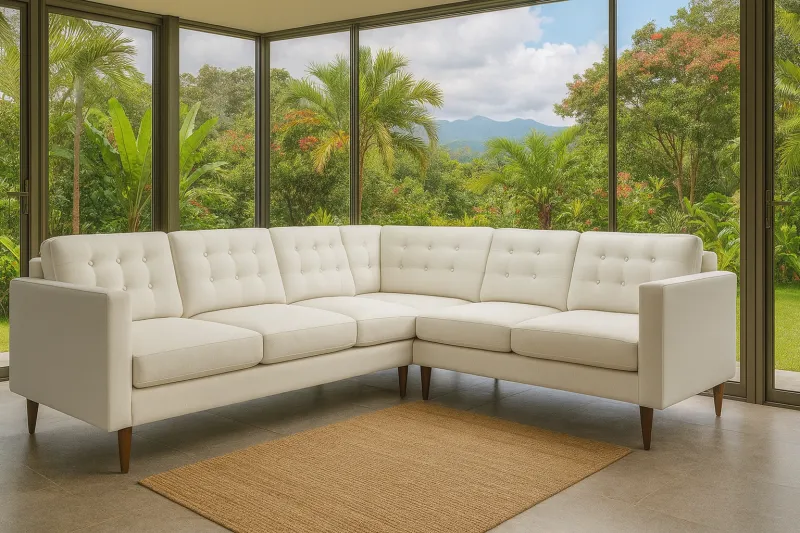
Think vertically, too. Wall-mounted bedside tables, floating shelves and slim consoles keep the floor clear and let air move underneath. Furniture on legs is your friend. A sofa with visible legs and an open base is less of a moisture trap than one with a solid skirt pushed flat to the wall. If you need storage, choose an open-backed unit or leave the back off a bookcase where it will not be seen. The aim is not to create a museum of floating furniture. It is to stop the cold wall becoming a sealed cupboard.
Making the gap look intentional
A gap behind the sofa can look like a mistake if it is dark, dusty and full of lost pencils. Make it a feature rather than a hiding place. A shadow gap with a low-level LED strip can look sharp. A slim, open-frame shelf behind a sofa can be useful without blocking airflow, as long as you do not fill it with solid boxes. A curtain that hangs clear of the wall is better than one tucked behind a radiator. And a rug that runs under the front feet of the sofa will visually pull the seating area together, so the gap reads as part of the room rather than a void.
Do not solve the problem by pushing the furniture back and adding a dehumidifier. The dehumidifier may help, but it is working against a blockage you have created. Deal with the gap first, then manage the moisture.
The rest of the moisture picture
Clearance is one part of the job. Ventilation is the other. Use extractor fans when cooking and showering, open a window briefly to purge moist air, keep trickle vents open if you have them, and avoid drying laundry on radiators in a closed room. A hygrometer is a cheap way to see what is actually happening; aim for a comfortable indoor humidity level rather than chasing a perfect number. If you see condensation on windows every morning, the room is telling you something.
If mould has already appeared, clean it appropriately and find the cause. Do not paint over it and hope. And if a cold wall is consistently wet, get it checked. Furniture clearance helps with condensation, but it cannot fix a leak.
A simple weekend audit
Walk round each room and identify the external walls, the ones with windows or a colder surface. Pull out the pieces that are pressed tight against them. Check the gap with your hand. Prioritise beds, wardrobes, sofas and solid-backed storage. Move what you can forward by 5cm to 10cm, and note where the room feels tighter. Often the answer is not less furniture but a shallower piece, a wall-mounted alternative or a different corner. Then open a window, run the extractor fan and give the room a chance to dry out.
A cold external wall is not the enemy. It is just a part of the building that needs a little air around it. At 925 Furniture, the practical view is simple: furniture should earn its place without sealing off the room. Give the wall some breathing space, and the room will feel easier to live in, even when the weather outside is doing its worst.