Service Access, Please: Furnishing Around the Working Bits of Your Home
Every UK home has them: the cupboard that hums, the hatch that hides the stopcock, the box on the wall with a label nobody reads until something goes wrong. They are the working bits of the house, and they have a habit of landing in the one spot where you would really like to put a sideboard.
The temptation is to shove furniture in front and pretend the whole thing does not exist. That works until the boiler needs servicing, the meter needs reading or a pipe starts doing something dramatic under the floor. A meter cupboard is not a sideboard. It is a service point, and the room has to work around it.
Start by opening every door
Before you move a single piece of furniture, do a slow tour with a torch and your phone camera. Open the meter cupboard, the boiler cabinet, the little hatch in the hallway and anything else that looks like it might contain something important. Photograph what is inside. Note the electricity meter, the gas meter if you have one, the consumer unit, the stopcock and the boiler. Label them in your head by how often you need to get to them.
The meter might need a monthly reading. The consumer unit might only need attention in an emergency, but that emergency will not wait while you drag a bookcase across the hall. The stopcock needs to be reachable in seconds, not after a ten-minute reshuffle. The boiler needs its annual service and whatever clearance the manufacturer asks for. Check the instructions or ask your installer rather than guessing. If you rent, ask the landlord or agent where everything is and what needs to stay accessible.
Access is the one rule you cannot style around
Furniture can be beautiful, but it cannot block a service point. Leave a clear working area in front of anything you might need to open, read or switch off. For a consumer unit, you want to stand safely and see what you are doing, not balance on a chair with a coat rack in your ribs. For a stopcock, you want a straight route with nothing heavy in the way. For a meter cupboard, you want the door to open fully and enough light to read the display.
This does not mean leaving a sad empty patch of floor. It means choosing furniture that moves easily or sits to one side. A light bench, a slim shoe rack or a small basket that can be shifted with one hand is far better than a solid built-in unit that has to be emptied before anyone can get to the hatch. If you are planning a run of hallway cabinetry, mark the service door on the plan and make sure it opens without taking half the room with it.
Ventilation is not a decorative detail
Boilers and meters need air. If a cupboard already has louvred doors or a vent, keep them. Do not cover the grille with coats, bags, shelves or a carefully styled stack of cushions. If you replace the doors, match the ventilation rather than sealing the cupboard up because slatted doors felt less tidy. A boiler cupboard is not a wardrobe. It is a plant room in miniature.
Keep the inside sensible, too. Do not store paint, aerosols, cleaning chemicals or anything flammable next to a boiler or consumer unit. A torch, a meter reading card and perhaps a small basket of cleaning cloths are fine. A crammed cupboard of winter coats and old paperwork is not. The aim is a service point that looks calm, not a junk drawer with a hinge.
Make the ugly bit look intentional
Once access and ventilation are sorted, you can deal with the look of the thing. The simplest trick is to treat the cupboard door as part of the room rather than an apology. Paint it the same colour as the wall so it recedes. Add a simple handle or a push catch that suits the rest of the joinery. If the door is damaged or dated, a slim replacement door with a magnetic catch can make a big difference without turning the job into a building project.
In a hallway or living room, think of the service cupboard as a small built-in. Give it the same trim as the skirting, keep the surrounding wall clear and let one good object nearby do the styling work. A framed print above, a slim mirror to the side or a single hook for keys is enough. Do not build a shrine to the meter cupboard. Just stop it looking like the house is ashamed of itself.
For renters, removable solutions are your friend. A tension rod and a simple fabric panel can soften a ugly hatch, provided it is nowhere near heat or a boiler vent. Adhesive hooks and lightweight frames are fine for the wall around it, but keep the service door itself clear. Ask before painting, and choose freestanding furniture that can be moved when the annual service comes round.
Furniture that works alongside the working bits
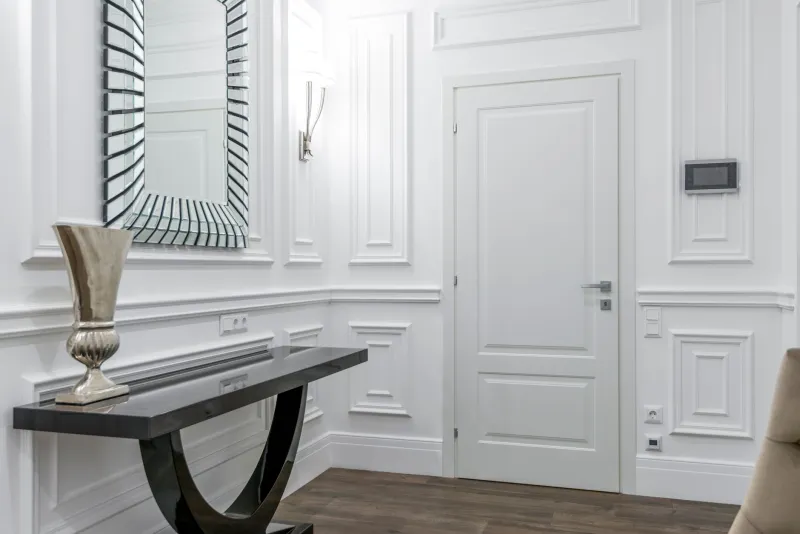
A shallow console table is often better than a deep sideboard in a hallway with a meter cupboard, because it leaves more floor clear in front of the door. A narrow tall cabinet beside the cupboard can take the clutter that would otherwise end up inside it. In a kitchen, a slim pull-out trolley can sit next to the boiler cupboard rather than in front of it. In a small living room, a bench with legs lets you see the floor and shift it quickly if you need to get to a hatch.
The best solution is usually a service wall: a run of cabinetry or furniture that looks continuous but has one clearly designed access door. The trick is to plan it honestly. Mark the clearances, keep the ventilation, use removable panels where pipes disappear and make sure the person who services the boiler does not have to dismantle your styling. Good joinery can hide the ugly bits without pretending they are not there.
A quick checklist before you commit
Can you open the cupboard door fully? Can you read the meter without moving a sofa? Can you reach the stopcock in under ten seconds? Is there still ventilation around the boiler or meter? Is anything stored inside that should not be? Does the furniture in front of it move easily? And does the whole thing look like it belongs in the room, rather than like a utility cupboard that gave up?
Services are not a design failure. They are part of the house, like radiators and chimney breasts. The trick is to furnish around them with a bit of respect and a lot of common sense. Hide what you can, keep accessible what you must, and never let a sideboard make a promise the stopcock cannot keep.