A Tree, a Clear Path and One Spare Chair: Christmas in a Small Living Room
Start with the walk, not the tree
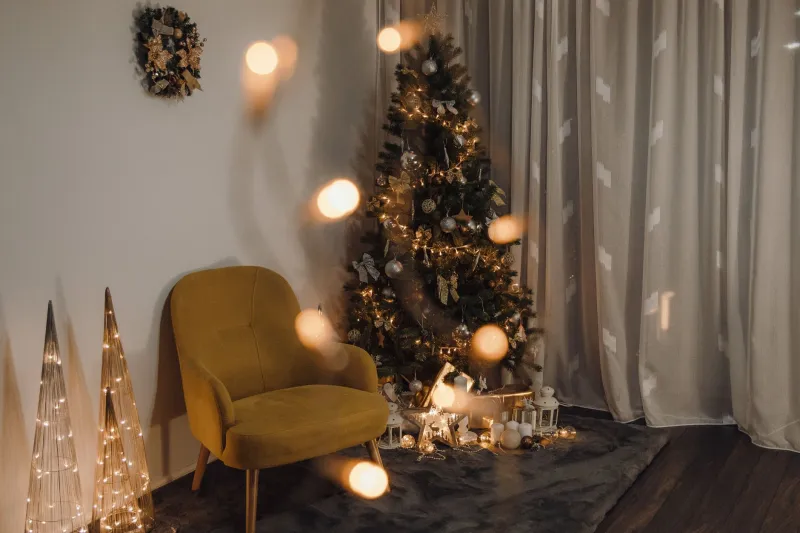
The Christmas tree usually arrives with a lot of goodwill and a slightly unrealistic idea of its own size. In a small living room, the temptation is to shove the sofa back, move the armchair into the hall and spend a weekend rebuilding the room around a conifer. By 2 January, you cannot remember why the lamp is where it is.
A better approach is to start with the walk. Stand in the doorway and trace the routes you actually use: from the door to the sofa, from the sofa to the radiator, from the coffee table to the plug socket. Those three paths matter more than the perfect tree corner. If the tree blocks any of them, it will be the thing you apologise for every time someone visits.
This is a one-evening job, not a redecoration. The aim is not a show-home Christmas scene. It is a room that still works when the tree is up, the fairy lights are on and someone has arrived with an extra bag of presents.
Measure the tree's real footprint
A Christmas tree's footprint is not the width of its trunk. It is the stand, the lowest branches and the cable reach, plus a little breathing room so you are not fighting the needles every time you walk past.
Start with the stand. A typical UK tree stand adds 45–60cm across, and the lowest branches can spread wider than the tree's advertised height suggests. A 1.8m tree may have a branch spread of around 1.2m at the base. Add 20–30cm of clearance on the side where people walk. That is the patch of floor you need to protect.
Then check the cable. Fairy lights rarely reach the nearest socket without an extension lead, and the lead itself needs to sit flat rather than loop across a walking route. Measure from the socket to the tree position along the skirting board, not through the air. If the cable would cross the doorway or the path to the radiator, the tree is in the wrong place, however good it looks in your head.
A useful trick is to mark the footprint with a couple of cushions or a folded throw for an hour. Walk around it. Sit down. See whether you can reach the lamp, the radiator valve and the biscuit tin without stepping over anything. The tree will feel smaller once it is decorated, but the floor space it takes up will not.
Use the swap-one-thing rule for seating
Extra chairs at Christmas are usually the real space problem, not the tree. You do not need to rearrange the whole room to seat two more people. Swap one thing instead.
If the armchair is the least-used seat for the rest of the year, move it to another room for December and put a dining chair or a small stool in its place. If the footstool lives in front of the sofa, slide it under the window and use it as a side table for drinks. If the coffee table is large and central, replace it with a smaller side table for the season. One swap, one clear gain.
The rule is simple: for every extra seat or gift zone you introduce, remove or relocate one piece of furniture. Not five. One. This keeps the room familiar and stops the Christmas layout from becoming a storage problem with tinsel on top.
Three places the tree should not go
There are three no-go zones in a small living room, even if the tree looks lovely there.
In front of the radiator. A tree blocks heat, dries out faster and makes the radiator pointless. It also puts needles and lights close to a heat source. Leave the radiator clear, or accept that the room will be cooler and the tree will sulk.
Across the door path. A tree that narrows the doorway to a shuffle is a tree that will be knocked every time someone arrives. Keep a clear run of at least 60–70cm through the main door if you can. In a tight room, that may mean a narrower tree rather than a different corner.
Over the plug socket. You need to reach the socket for the lights, the lamp and the charger without crawling behind the tree. If the socket is behind the tree, move the tree, not the socket. An extension lead can be managed along a skirting board; a socket buried under branches cannot.
Make a temporary gift-and-guest zone
Presents need a home that is not the sofa. In a small room, a temporary zone works better than a permanent one. A lidded basket beside the tree, a folded blanket over a stool, or a clear patch under a side table can hold gifts without turning the floor into an obstacle course.
For guests, think in terms of surfaces rather than furniture. A small tray on the arm of the sofa, a side table that doubles as a drinks station and a basket for coats near the door will do more for a December evening than an extra chair squeezed into the corner. If you do need another seat, borrow a dining chair and give it a cushion and a throw. It can go back on Boxing Day without anyone noticing.
Put it back in one evening in January
The reason Christmas rearranging feels like a weekend job is that no one wrote down what the room looked like before. Take two minutes now to photograph the room from the doorway, including where the lamp, side table and armchair sit. Note anything you moved to the loft or the spare room.
In January, work in reverse. Tree out first, then the one swapped item back, then the small things. Vacuum the footprint, check the skirting board for scratches, and put the furniture back using the photograph rather than memory. The whole reset should take an evening, not a weekend.
A small living room does not need a smaller Christmas. It needs a clearer plan: one tree footprint, one swapped seat, three clear paths and a January reset you can do before the decorations go back in the loft.